
Decoration with Ipe exterior wood decking: an urban oasis next to Santa María del Mar
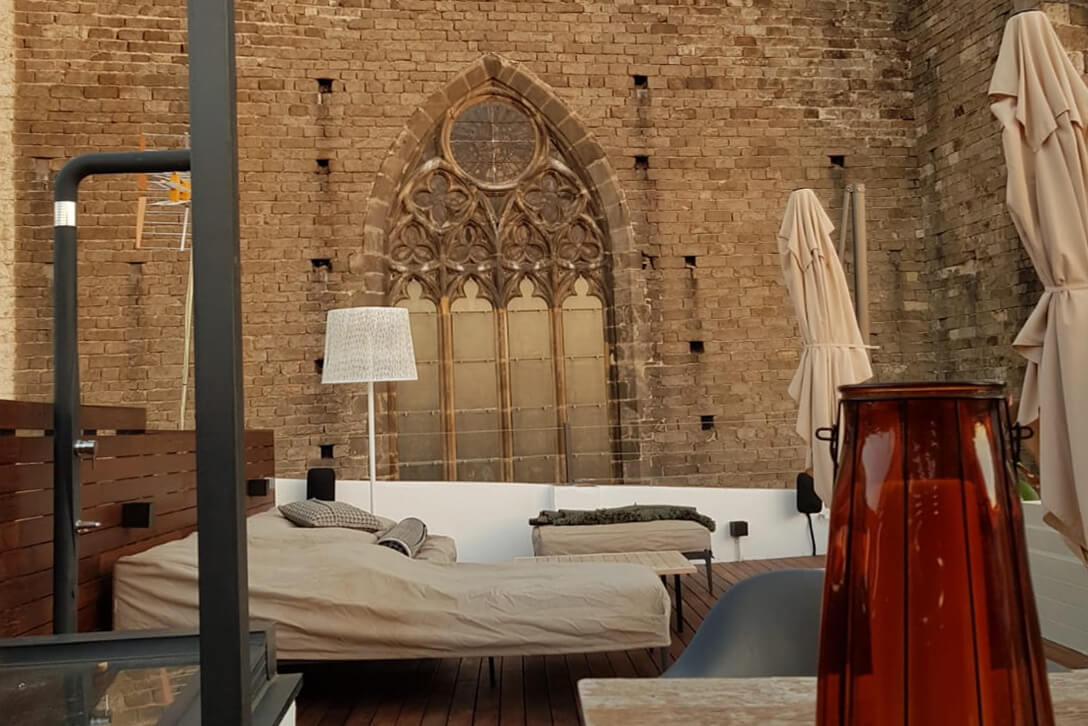
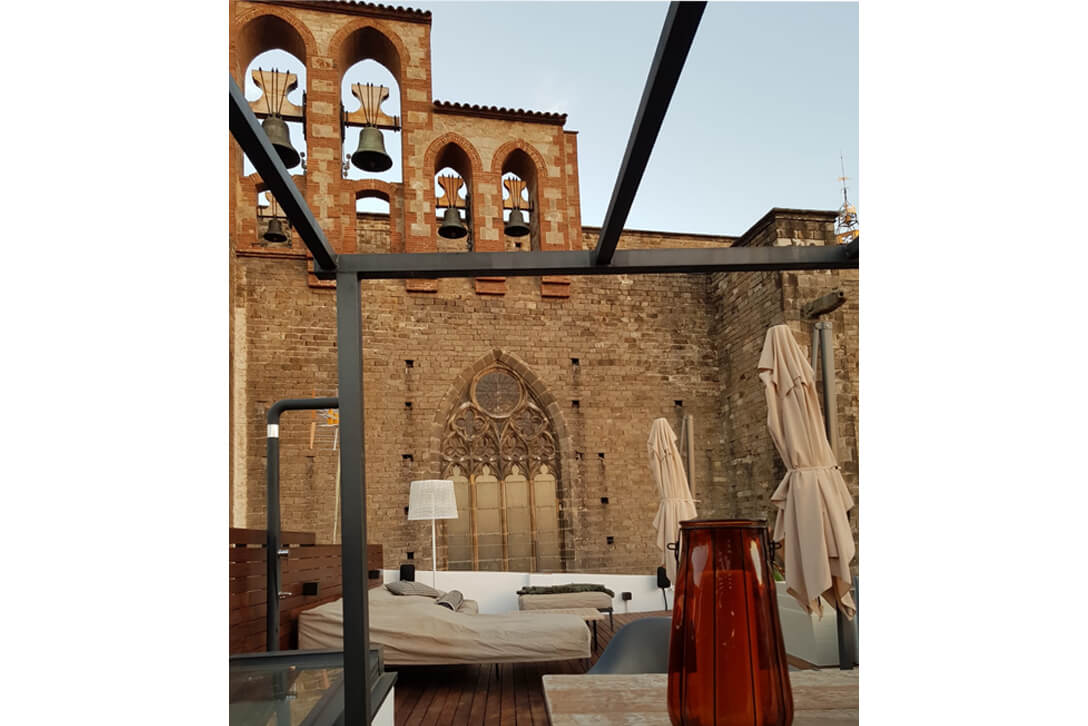
Located just a few steps from the iconic Santa María del Mar Church, in the heart of Barcelona’s Born district, this outdoor terrace is a renovation project that combines design, sustainability and nature in perfect harmony. The terrace renovation, carried outby the Moskito team, is based on a simple but ambitious premise: to convert an unused space into a lively, welcoming and functional setting for enjoying the outdoors all year round.
The soul of the project: natural beauty, order and versatility
From the outset, the intention was clear: to preserve the original character of the urban environment, integrating elements that would dialogue with the surrounding architecture and provide warmth, texture and functionality. To achieve this, the focus was on noble materials, versatile solutions and a palette of natural tones.
The transformation of the space includes three key elements:
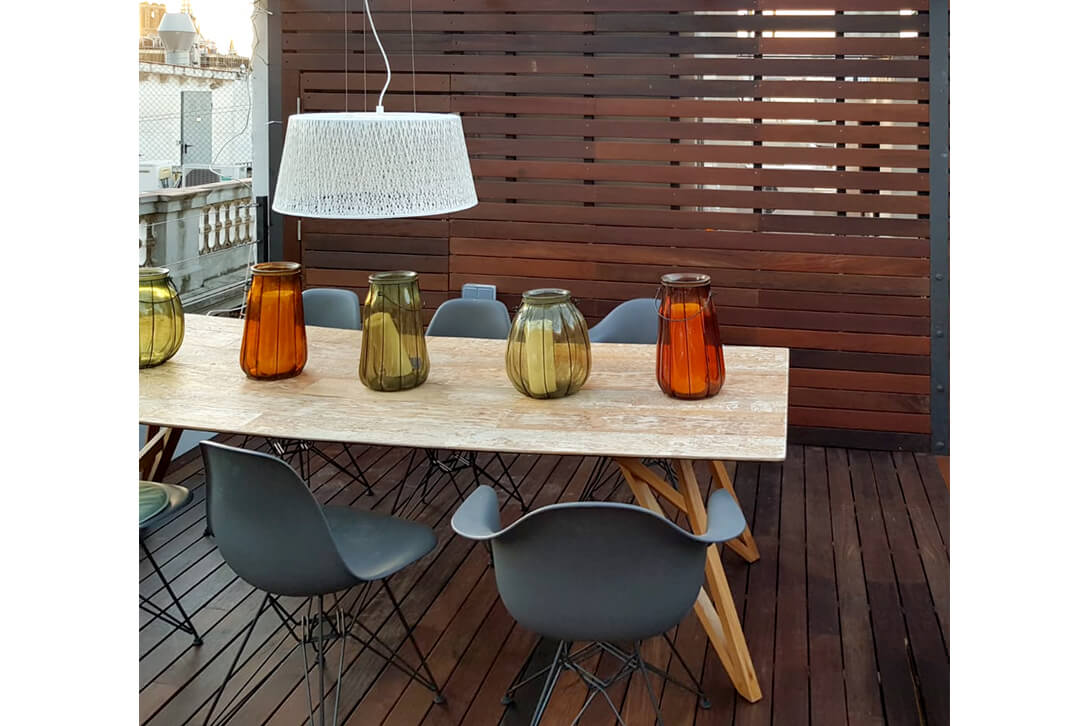
- The installation of FSC Ipe wood decking, which visually unifies the terrace and adds warmth, durability and natural continuity with the surroundings.
- A vertical wall clad with wooden slats, which acts as a warm backdrop and structures the space.
- An elegant metal pergola that provides shade and visual depth without losing lightness or spatial continuity.
The result is a space that invites relaxation and enjoyment, capable of transforming itself according to the time of day or season.
Outdoor wooden decking: why choose Ipe?
One of the major decisions for the project was the choice of flooring. The decision to use Ipe decking was not accidental: it is a tropical wood with extremely high density, renowned for its natural beauty, structural strength and excellent weather resistance.
Ipe (or ‘ipé’) is a wood from South America, dark brown in colour with deep grain, notable for its hardness, stability and low porosity. These attributes make it one of the best choices for outdoor wooden decking, even in demanding contexts such as urban terraces, damp areas or high-traffic environments.
🌿 Certified sustainability: FSC-certified Ipe wood has been used in this project, guaranteeing responsible forest management and traceability from its origin. A choice that reaffirms Moskito Parquets’ commitment to responsible design.
Discover the technical specifications of Moskito Dek decking

Outdoor decking: differences between Ipe wood and synthetic or composite decking
Nowadays, many terraces opt for composite or synthetic solutions, but Ipe remains the benchmark for those seeking authenticity, durability and natural ageing that becomes more beautiful over time.
|
Feature
|
Ipe wood
|
Synthetic/composite decking
|
| Appearance | Natural, unique, with grain | Uniform, artificial |
| Touch | Warm and noble | Soft but plastic |
| Maintenance | Requires specific oil | Low, but discolours in sunlight |
| Durability | Very high (up to 40 years) | Medium/high (10-20 years) |
| Repair | Easily sandable and restorable | Difficult to repair |
| Sustainability | Certificable (FSC) | May contain non-recyclable plastics |

How to maintain outdoor Ipe decking so it looks as good as new
One of the most widespread myths is that outdoor wooden decking requires complex maintenance. Nothing could be further from the truth: properly installed and treated Ipe decking requires very little care to remain in pristine condition for decades.
Here are our key tips:
- Apply Ipe wood oil once or twice a year, depending on sun exposure.
- Clean with water and mild soap in case of stubborn dirt.
- Avoid abrasive products or pressure washing.
- If you want to restore the original colour after years of exposure, simply sand lightly and reapply oil.
Regular oiling not only keeps the wood hydrated, but also enhances its colour and protects it from UV rays, moisture and stains.
What does Ipe mean and where does this wood come from?
‘Ipe’ comes from the common name given to various species of the genus Handroanthus (formerly Tabebuia), large trees native to tropical areas of South America, especially Brazil, Bolivia, and Peru. It is characterised by extremely dense fibre (it can sink in water), which makes it highly resistant to pests, moisture, and fungi.
Its traditional use in architecture has been synonymous with quality and resistance, both in outdoor decking and in street furniture, façades and even jetties.
How to lay Ipe wood decking on a terrace
To ensure the durability and stability of the system, it is essential to install it correctly:
- Level base structure, preferably made of aluminium or resistant tropical battens.
- Spacing between boards to allow for expansion and prevent water accumulation.
- Concealed fastening system with stainless steel staples or clips.
- Pre-treatment with protective oil, especially if installation is carried out in the middle of summer.
In this project, the Moskito assembly team opted for a concealed fastening system, which allows the flooring to retain its visual appeal and remain free of screws or finishes.
An outdoor deck that inspires
This terrace decoration project with Ipe outdoor wood decking is, in reality, a statement of intent: a space that connects the natural with the urban, the functional with the emotional.
Just a few metres from Santa Maria del Mar, it demonstrates that outdoor wood decking not only stands the test of time, but also embellishes it.
A corner where every material tells a story and every decision—such as choosing Ipe wood—speaks to a way of understanding architecture: through honesty, quality and respect for the environment.
Are you thinking of transforming your terrace?
At Moskito Parquets, we help you turn any outdoor space into a unique, natural and durable place. Visit us at Moskito Barcelona or contact us for a no-obligation consultation.

Sobre el Autor: Xavi Font Viadé
Xavi Font es artesano del parquet y gerente de Moskito Parquets. Con más de 25 años de experiencia trabajando la madera, asesora personalmente proyectos residenciales, retail y contract, desde la elección del material y el acabado hasta los aspectos técnicos de su instalación.
Desde Barcelona, trabaja junto a arquitectos, interioristas y clientes particulares en proyectos nacionales e internacionales donde la madera natural, el oficio y la precisión constructiva son protagonistas.
Es miembro de la Asociación Catalana de Industriales del Parquet (ACIP) y de la Federación Española de Pavimentos de Madera (FEPM).


